
The operations of the state research agency, Council for Scientific and Industrial Research (CSIR) are constrained by poor funding and minimal patronage of innovative products from its various research institutions by both government and the private sector.
This situation, according to the deputy director-general of the institute, Professor Marian Dorcas Quain, undermines the advancement of research commercialization and innovation across the research ecosystem, which is highly needed to drive national development.
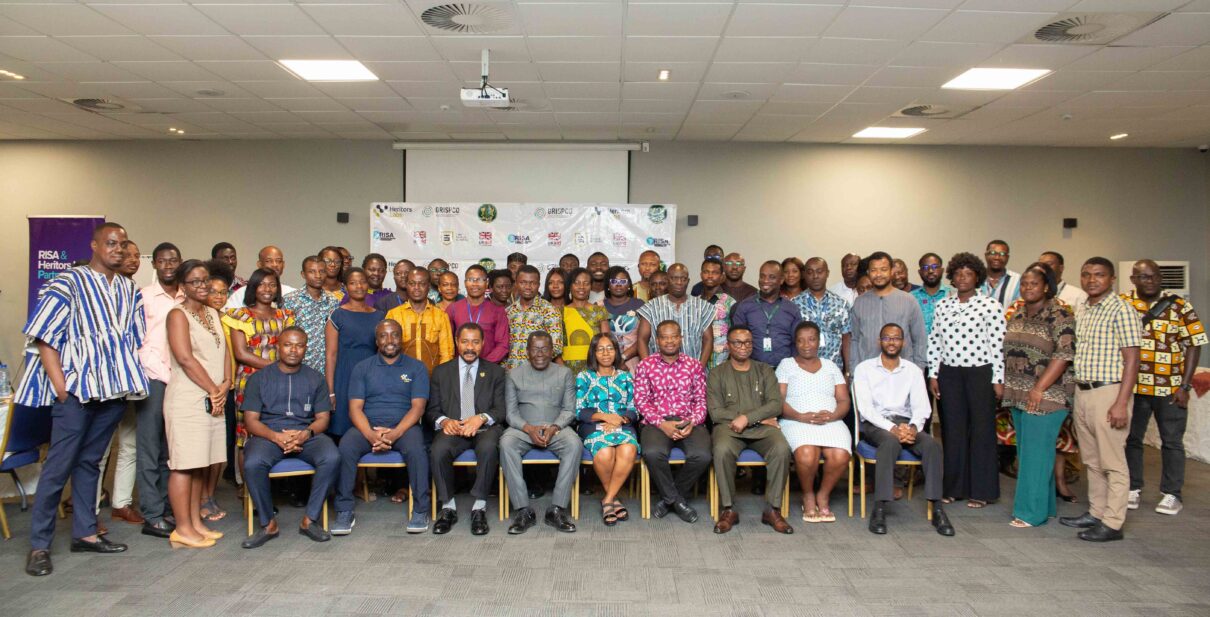
Professor Quain, who disclosed this at a one-day discovery roundtable organized by Heritors Labs Ltd, in partnership with the Ministry of Environment, Science, Technology and Innovation (MESTI) also cited the diversion of CSIR jobs into private hands without the requisite credit and financial benefits as well as poor staff commitment due to low motivation as equally harmful to their operations.
“The over-reliance on donor funding for research and private sector uptake of CSIR technologies and innovations are key challenges of the research institutions. Other concerns include the poor patronage of the institutes’ products by the government and the business community”
Professor Quain

Looking ahead, Prof. Quain said the CSIR will adopt an aggressive private sector approach and deepen collaboration with universities and agencies whilst announcing plans to establish a graduate school for research.
According to her, these new strategies in addition to other innovative internal revenue generation mechanisms would enhance the operations of the research institutions in the short-to-long term.
The Ghana Industry-University-Research Innovation Collaborative (GIURIC) is an initiative that seeks to engender the right collaborations to kick-start discussions around industry-academia mismatch and how demand-based research could drive national development.
Technical Adviser to the Minister at the Ministry of Environment, Science, Technology and Innovation (MESTI), Mr. Oliver Boachie, reiterated government’s quest to develop the economy through science, innovation and technology.
This, he said, would require industry to uptake research outcomes and innovations from universities and research institutions to create jobs and to expand the local economy.
Mr. Boachie disclosed that in the next decade, MESTI will aggressively push innovation as the engine of economic development leveraging its already developed master plan that was borne out of a partnership with the Republic of Korea.
According to him, the masterplan demands close collaborations between industry, academia and research institutions and for that matter the GIURIC workshop was an appropriate forum to solicit the concerns and suggestions of all participants towards the advancement of STI for national development.
Chief Executive Officer of Heritors Labs, Derrydean Dadzie, shared that his organization remains committed to providing the enabling space for meaningful and scaled-up impact acceleration of research and innovation commercialization.
He admitted that there are silo results in the research and innovation space benefitting either the loudest or the person who is closer to something but Heritors Labs will work continually to ensure that tangible benefits that do not sit at the labs.
Mr. Dadzie emphasized the need for viable value chains for research and innovation that can help to create a viable economy; from the thinking stage to product stage to when it has to be disposed of.
Ghana Country Lead for the RISA Fund, Gameli Adzaho, reiterated RISA’s quest to support the strengthening of research across six African countries with clear-cut goals for each of them.
In Ghana, he said the Fund seeks to nurture a culture that advances research and innovation through viable synergies and deepened stakeholder participation whilst facilitating research and innovation to feed into the nation’s sustainable development and trade ambitions.
According Mr. Adzaho, Heritors Labs have shown strong competence in galvanizing the research ecosystem to stir innovation in line with the goals of the Fund.
On the GUIRIC workshop, he called for fruitful interactions that would unearth the strengths, opportunities and challenges of the industry, academia and research institutions.